Sodatide's benefits divide cleanly. The claims about format — easy, stimulant-free, vegetarian, named ingredients — hold up completely. The claims about effect all run into the same wall: the doses.
The direct answer
Supported: a genuinely easy once-daily habit, an honestly stimulant-free formula, named ingredients including a named strain, and a vegetarian lactose-free capsule. Partly: gut and digestive support, where the mechanism is right but the dose is small. Not supported: appetite, metabolic and weight claims.
Sodatide contains fermentable prebiotic fibre and live probiotic cultures. Gas and bloating in the first week are normal while the gut adjusts. Inulin is a FODMAP and frequently triggers symptoms in irritable bowel syndrome. Live-culture supplements are not suitable for everyone — anyone immunocompromised, seriously unwell or with a central venous catheter should not start one without medical advice. Sudden unexplained weight loss, persistent abdominal pain or blood in the stool need clinical assessment, not a supplement.
The verdict table
| Marketed claim | Verdict | Ruling |
|---|---|---|
| A simple once-daily capsule routine | Supported | Supported. |
| Three named components, not a hidden blend | Supported | Supported. |
| A stimulant-free alternative to diet pills | Supported | Supported. |
| Full transparency on amounts | Not supported | Not supported. |
| A meaningful prebiotic dose | Not supported | Not supported. |
| An effective probiotic dose | Not supported | Not supported. |
| Supports metabolism and weight | Not supported | Not supported. |
| A guarantee you can rely on | Partly | Partly. |
Every claim, examined
A genuinely easy daily habit Supported
One capsule, once a day, thirty per bottle. No timing protocol, nothing to measure, no second dose to remember. Easy routines get taken; complicated ones get abandoned, and this is the part of the product that works.
Stimulant-free by design Supported
No caffeine, no green tea extract, no thermogenic. For anyone who has given up on diet capsules because of jitters or disturbed sleep, that is a real and deliberate difference.
Named ingredients, including a named strain Supported
Chicory root inulin, potato resistant starch, and a probiotic blend that names Akkermansia muciniphila specifically. Naming even one strain is more than most gut blends do.
Vegetarian and lactose-free Supported
A vegetarian capsule with no dairy carrier, which genuinely widens who can take it. This is checkable and both sellers agree on it.
Gut microbiome support Partly
The mechanism is sound in principle — fermentable fibre feeds resident bacteria, live strains add to them. At 211 mg and 100 mg of fibre, the feeding is a gesture rather than a dose, and no CFU count means the seeding cannot be judged at all.
Digestive comfort and regularity Partly
Fibre and live cultures are the two levers most used for this, so the direction is right. The amounts published are far below what the regularity research uses, and fibre can cause gas before it settles anything.
Appetite support through satiety Not supported
Fullness signalling from fermentable fibre is a genuine research area, at gram-level doses that slow gastric emptying. A few hundred milligrams does not do that.
Metabolic and weight support Not supported
This is what the product is sold on. There is no trial of the finished capsule, the fibre amounts are a fraction of studied doses, and the probiotic dose is unpublished.
Get Sodatide at the current discount
Sodatide sells from $49 a bottle on the six-bottle pack, with free US shipping and a 60-day money-back guarantee.
Check the Sodatide PriceOfficial website checkout · 60-day guarantee · confirm the terms before paying
The benefits that genuinely hold
It is worth being fair, because this product gets several things right that most of its category does not. It is honestly stimulant-free. No caffeine, no green tea extract, no thermogenic hidden in a blend. For anyone who has abandoned diet capsules because of jitters or ruined sleep, that alone is a meaningful difference.
The routine is as easy as this category gets. One capsule, once a day, thirty in a bottle, a clean 30-day supply. And the ingredient choices are sensible: inulin and resistant starch are exactly the fibres a prebiotic formula should use, and naming Akkermansia muciniphila specifically is more than most blends do.
The benefits that fail, and why they fail together
Appetite support, metabolic support and weight support are the three outcomes the product is actually sold on, and all three fail for one reason: the mechanism is dose-dependent and the dose is not there. Fermentable fibre slows gastric emptying and drives satiety signalling at gram-level intakes. At 211 mg it does not.
The probiotic side fails differently — not because the dose is small, but because no dose is published at all. With no CFU count, the live-culture contribution cannot be judged in either direction.
Claims Sodatide cannot make — and neither can we
- It does not treat, cure or prevent obesity or any diagnosed metabolic or digestive condition.
- It does not accelerate calorie burning, whatever the artwork says — it contains no stimulant.
- It is not a substitute for assessment of unexplained weight change or persistent digestive symptoms.
- It is not FDA-approved, because no dietary supplement is.
In the United States, claims of that kind put a seller on the wrong side of FTC health-claim guidance. To their credit, both selling pages state plainly that the product is not a treatment for any condition.
What genuinely supports gut health, for comparison
Dietary fibre in grams — onions, garlic, oats, beans, lentils, cooled potatoes. Variety of plant foods across the week. Fermented foods such as yoghurt, kefir and kimchi. Then sleep, activity and limiting alcohol. None of it costs $49 a bottle, and all of it operates at the doses the research actually used.
For mechanisms see how Sodatide works; for the amounts see the ingredients analysis.
Questions people ask about this
What are the benefits of Sodatide?
Its solid benefits are format ones: an easy once-daily capsule, no stimulants, named ingredients and a vegetarian lactose-free formula. Its effect claims are limited by very small published doses.
Will Sodatide help me lose weight?
There is no trial of the finished product, the fibre amounts are a few per cent of studied doses, and no capsule controls diet, activity or sleep.
Does Sodatide help with bloating?
It may, eventually — but fermentable fibre commonly causes bloating first, and inulin frequently triggers symptoms in people with IBS.
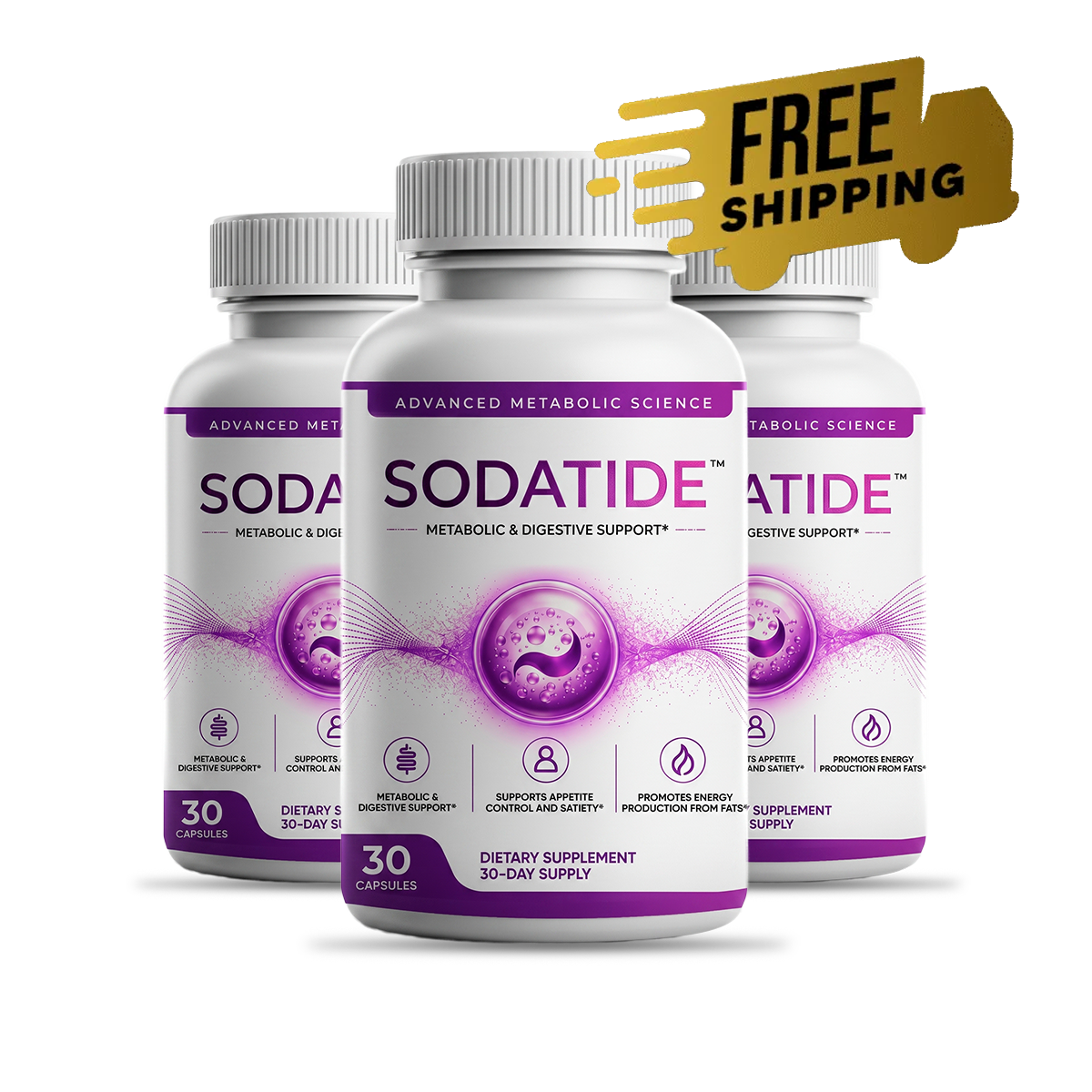
Sodatide Official Website
per bottle on the 6-bottle pack · free US shipping on 3 and 6
Check Current Price 60-day guarantee · official checkout only